CAE Speaking Test 2: decisions, shared responsibility and new experiences
CAE Speaking Test 2 is a free C1 Advanced Speaking practice test in four parts, with recorded examiner prompts and 6 photos. You compare decisions and shared responsibilities, then discuss the value of experiences beyond familiar routines. The Part 3 question is “How might these experiences help people move beyond their usual routines?”
- Free, no sign-up to start
- Solo practice with recorded examiner prompts
- Estimated Cambridge English Scale score
What is in CAE Speaking Test 2
| Part | Task | Exam time | In this test |
|---|---|---|---|
| 1 | Interview | 2 min | 8 questions (6 asked), from “Where are you from?” |
| 2 | Long turn | 4 min | 3 photos each: people considering different alternatives; people sharing responsibility for practical tasks |
| 3 | Collaborative task | 4 min | How might these experiences help people move beyond their usual routines? |
| 4 | Discussion | 5 min | 6 questions (5 asked), from “Why do some people find familiar routines reassuring while others find them limiting?” |
Solo practice: you answer recorded examiner prompts. The real test is face to face with two examiners, usually in pairs.
Part 1: interview
- Where are you from?
- What do you currently spend most of your time doing?
- What do you usually consider before making an important decision?
- Which cultural activity would you like to experience more often?
- Do you prefer arranging your free time in advance or deciding on the day? Why?
- How do you make time for interests when you are busy?
- Has your attitude to trying unfamiliar activities changed? extra
- What kind of commitment would you like to make more time for in the future? extra
Part 2: long turn
Candidate A (you)
Photos of people considering different alternatives.
What might the people be taking into account?
How difficult might it be for them to reach a decision?



Partner question: Which of these decisions do you think would benefit most from another person’s opinion? Why?
Candidate B
Photos of people sharing responsibility for practical tasks.
How might sharing responsibility help in these situations?
What difficulties might the people have to overcome?


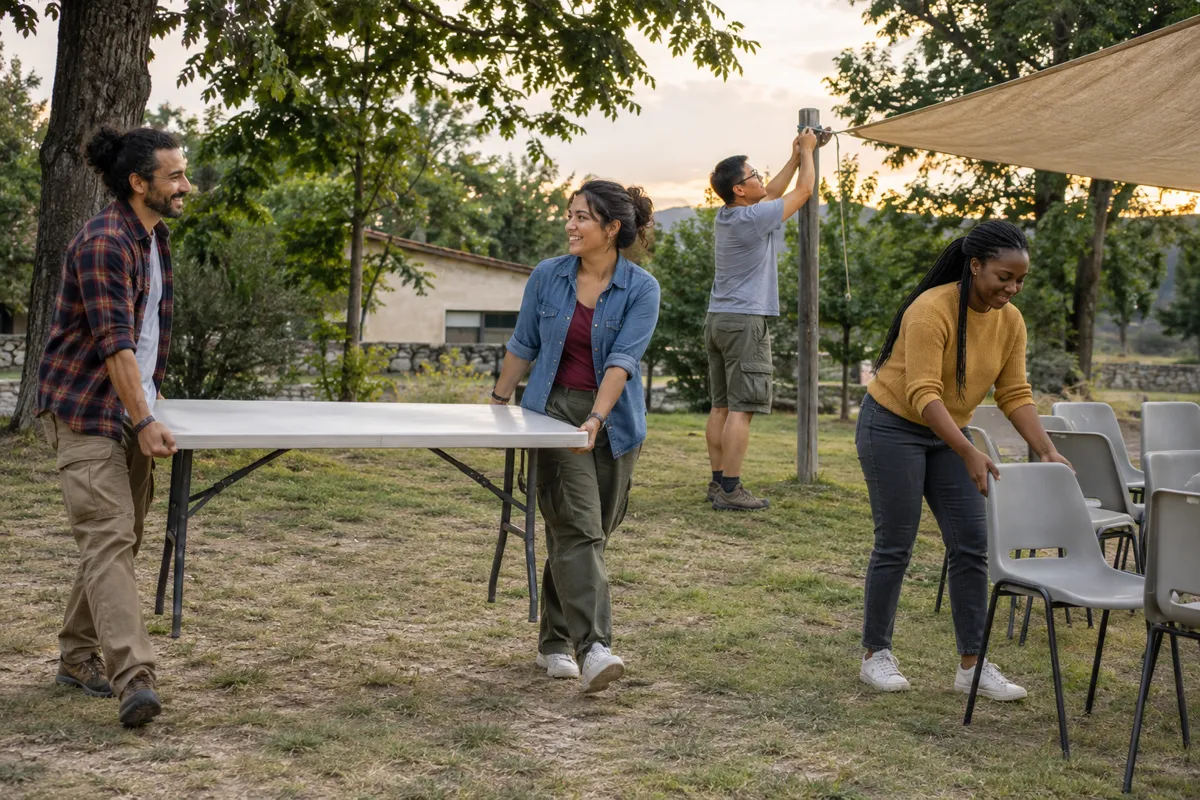
Partner question: In which situation might dividing the work clearly make the greatest difference? Why?
Part 3: collaborative task
How might these experiences help people move beyond their usual routines?
- learning with a different age group
- visiting an unfamiliar place
- taking on a small responsibility
- creating something with others
- spending time without a fixed plan
Now you have about a minute to decide which experience would be most valuable for someone who rarely tries anything new.
Part 4: discussion
- Why do some people find familiar routines reassuring while others find them limiting?
- Is an unfamiliar experience always more valuable than a familiar one? Why?
- How much responsibility should schools have for introducing students to unfamiliar situations?
- What can people learn from spending time with others whose lives are very different?
- Can too much choice prevent people from trying something new? Why?
- Do you think people become more cautious about new experiences as they get older? Why? extra
How it is marked
CAE Speaking marking
Grammatical Resource, Lexical Resource, Discourse Management, Pronunciation, Interactive Communication and Global Achievement: 75 marks. Our expert evaluation gives an estimate from your recordings.
More CAE Speaking tests
CAE Speaking practice tests · CAE Mock Test 2 · Updated 15 November 2026
Ready for CAE Speaking Test 2?
15 minutes in the exam; the solo practice is a little shorter. Free, no sign-up to start: you give an email address when you submit, and we email you when your expert evaluation is ready to view.